NEW · A COMPANION TO THE YOGĀCĀRABHŪMI
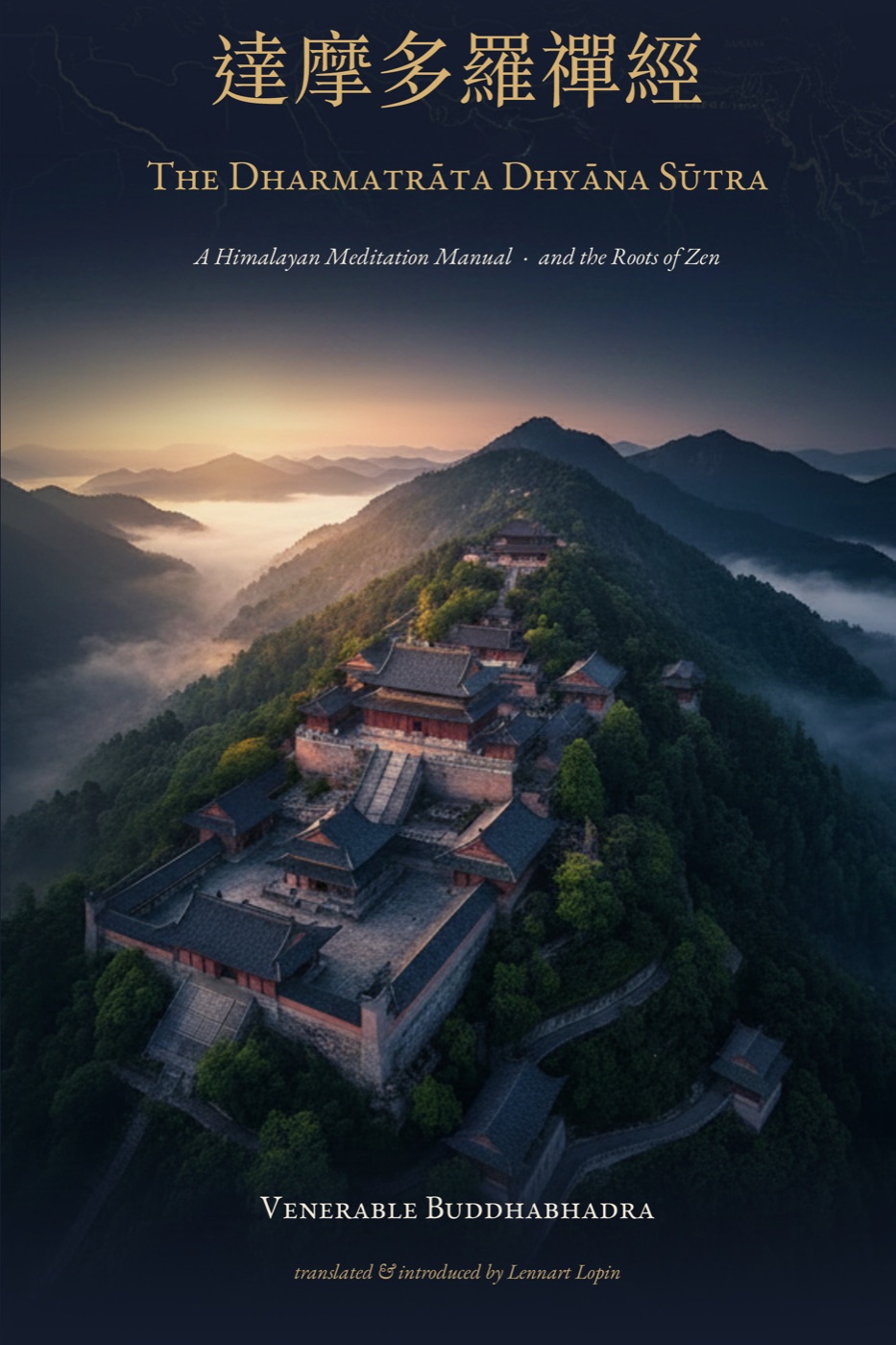
The Dharmatrāta Dhyāna Sūtra
A Himalayan Meditation Manual — and the Roots of Zen
- Pages
- 228
- Published
- August 2026
- ISBN
- 979-8-1917469-2-0
- Format
- Paperback & Kindle
NEW · A COMPANION TO THE YOGĀCĀRABHŪMI
A Himalayan Meditation Manual — and the Roots of Zen
Around the year 411, at a monastery on Mount Lu, an Indian monk named Buddhabhadra sat down with a Chinese community and turned a living meditation course into their language. He had carried it out of Kaśmīr — the mountain country that had become the conservatory of Buddhist meditation — and the abbot Huiyuan had been waiting years for just this account.
It is a course of training, not a treatise: how to sit, how to work with the breath, how to steady a bolting mind.from the introduction
The book is the Dharmatrāta Dhyāna Sūtra — the Damoduoluo chan jing (達摩多羅禪經), Taishō no. 618. The title honours one name; the teaching belongs mostly to another. Buddhasena is the master behind the fourfold breath, the shares and stages; Dharmatrāta stands in the lineage the prefaces remember. Much of the manual is in verse, and it teaches the way the northwestern masters taught: by image and comparison, a picture before a proof.
Two things set it apart. The first is where it comes from: fifth-century Kaśmīr, Jibin, where a serious practitioner travelled in order to be trained. The second is where it went: into China, in the hands of a foreign master, at the very moment Chinese Buddhism was working out what a meditation teacher even was. Centuries before anyone would call the result Chan, or later Zen, books like this one — and men like Buddhabhadra — were laying down what it meant in China to sit and school the mind.
The book has been put into English once before, inside a doctoral dissertation that never left the university repository. This is the first edition made for a reader who means to practise, or simply to read. The Indian original is lost; we have only Buddhabhadra’s Chinese. The translation is collated throughout against Chan Yiu-wing’s learned 2013 rendering, gratefully acknowledged, and annotated with verified parallels in the Pāli canon, the Chinese Āgamas, and the Abhidharmakośa.
It is the natural companion to Saṅgharakṣa’s Yogācārabhūmi in this same series: two Gandhāran–Kashmiri manuals, two roads into China, two answers to the same question — how, exactly, is this done?
COLOPHON
Small presses live on honest words from real readers. If this edition has been part of your practice or your study, an honest review on Amazon — whatever you truly think — helps the next reader find it.