NEW · SAYAMEVA PAKĀSITĀ · VOLUME I
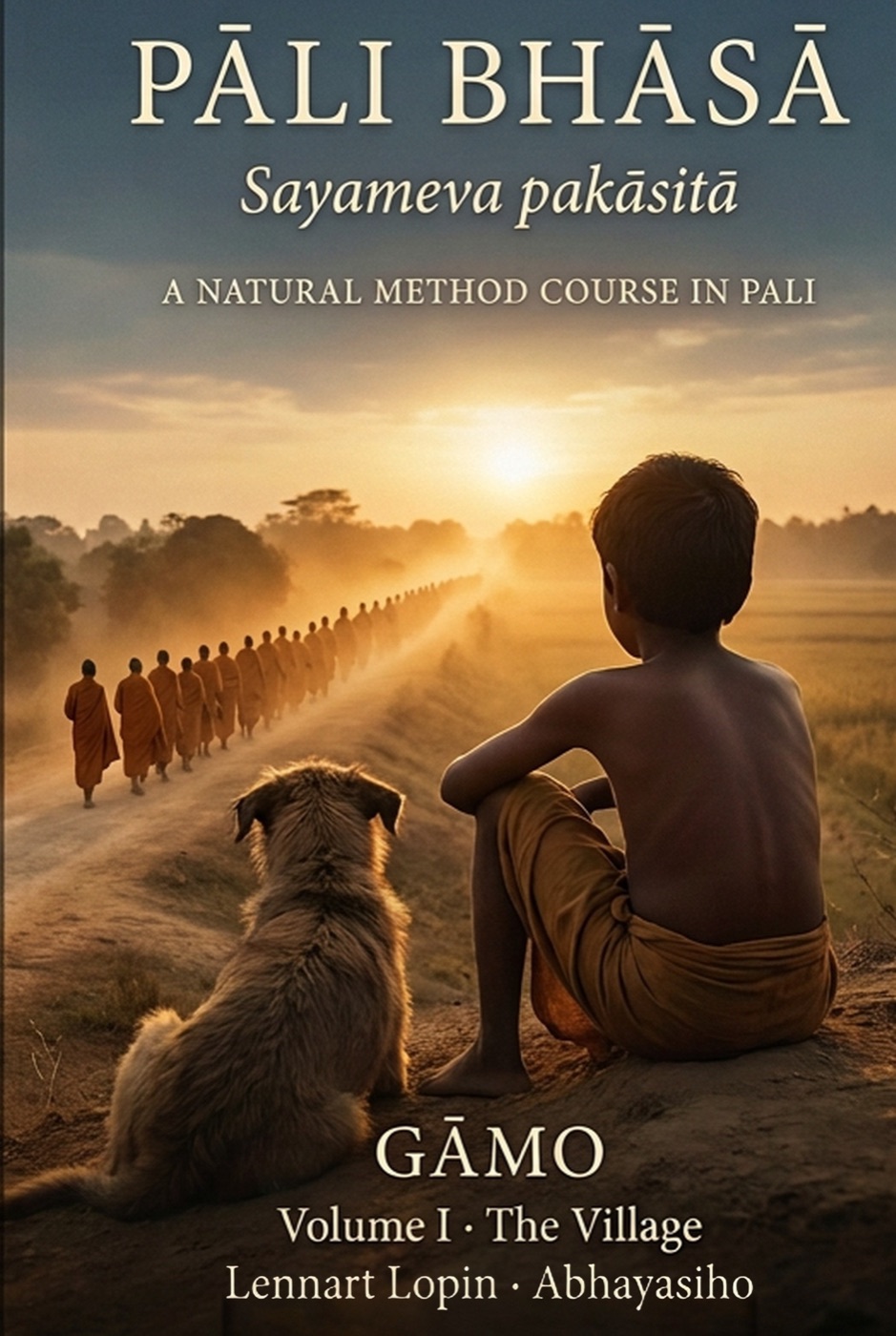
Pāli Bhāsā
A Natural Method Course in Pali · Volume I — The Village (Gāmo)
- Pages
- 345
- Published
- August 2026
- ISBN
- 979-8-1923641-2-3
- Format
- Paperback, Hardcover & Kindle
NEW · SAYAMEVA PAKĀSITĀ · VOLUME I
A Natural Method Course in Pali · Volume I — The Village (Gāmo)
Gāmo hoti. Gāme rukkho hoti. Rukkhe ambāni honti. There is a village. In the village is a tree. On the tree are mangoes. You have just read Pāli, the language of the oldest record of the Buddha’s teaching. Nobody translated it for you, and nobody needed to.
If you learned Latin from Hans Ørberg’s Lingua Latina per se Illustrata, you already know how this feels — the strange delight of a language teaching itself.from the book
That is the whole method. There is not one word of English in the lessons. Beginning with sentences that explain themselves, the book builds a world a reader can live in: a boy named Nando, his family’s fields and animals, a village of potters and smiths and weavers — and the great road it stands on, the old highway between Rājagaha and Nāḷandā. The village festival teaches you the future tense. The monsoon teaches you the sky. The market teaches you to haggle. And the road — down which, as any reader of the suttas knows, somebody walks — teaches you to ask the two oldest questions in Pāli: kuhiṃ gacchasi? kuto āgacchasi?
What arrives in the village in the final chapters, you will read for yourself — and by then you will need no translator. That was the point all along. Grammar is met in the story first and named afterward, in a short Grammatica at the end of each chapter, followed by exercises answered in Pāli. Margin notes use only Pāli. Every new content word comes with a picture. The spoken formulas are drawn from the canon itself, so the language you learn is speakable, not only decodable.
Twenty-eight graded chapters — some 25,000 words of readable Pāli. Nineteen full-page plates and hand-drawn maps of Nando’s world. Over 250 margin illustrations. A complete reference: paradigm tables, a 400-family analytical index, an irregular-form finder, and the canonical sources of the book’s similes. The last dialogue lets the children talk about Pāli in Pāli — the door into the native grammarians.
For Buddhists who want the suttas in the Buddha’s own words; for meditators who chant what they cannot yet parse; for Latinists who know the natural method works and have waited for someone to give it to Pāli. Volume II, Bhagavā, will tell the Buddha’s life in his own voice — in the past tense this volume places in the reader’s hands. The same staircase, in other words, as our Latin Gospels and as Imperial Restitution’s Lingua Latina readers: begin where you stand, and end inside the unaltered source.
COLOPHON
Small presses live on honest words from real readers. If this edition has been part of your practice or your study, an honest review on Amazon — whatever you truly think — helps the next reader find it.